Memorial Park: Where the Ferry Meets the Crosswalk
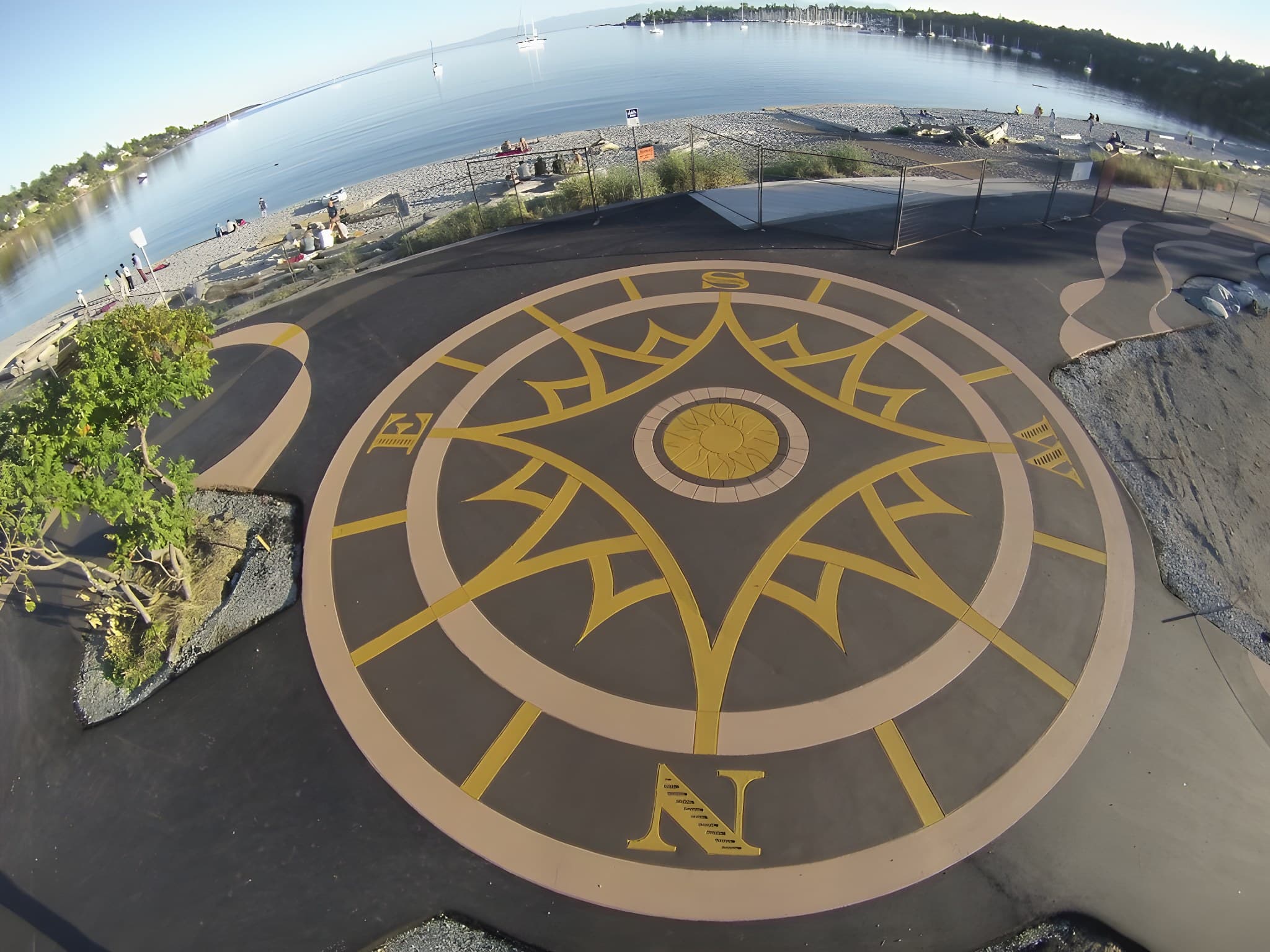
Memorial Park sits at the foot of a hill in White Rock, BC, where Marine Drive meets the pier and the ferries that cross to Sidney. It's a small site by the standards of urban design — perhaps four hundred square metres of public realm, plus a crosswalk that connects the parking lot to the boardwalk.
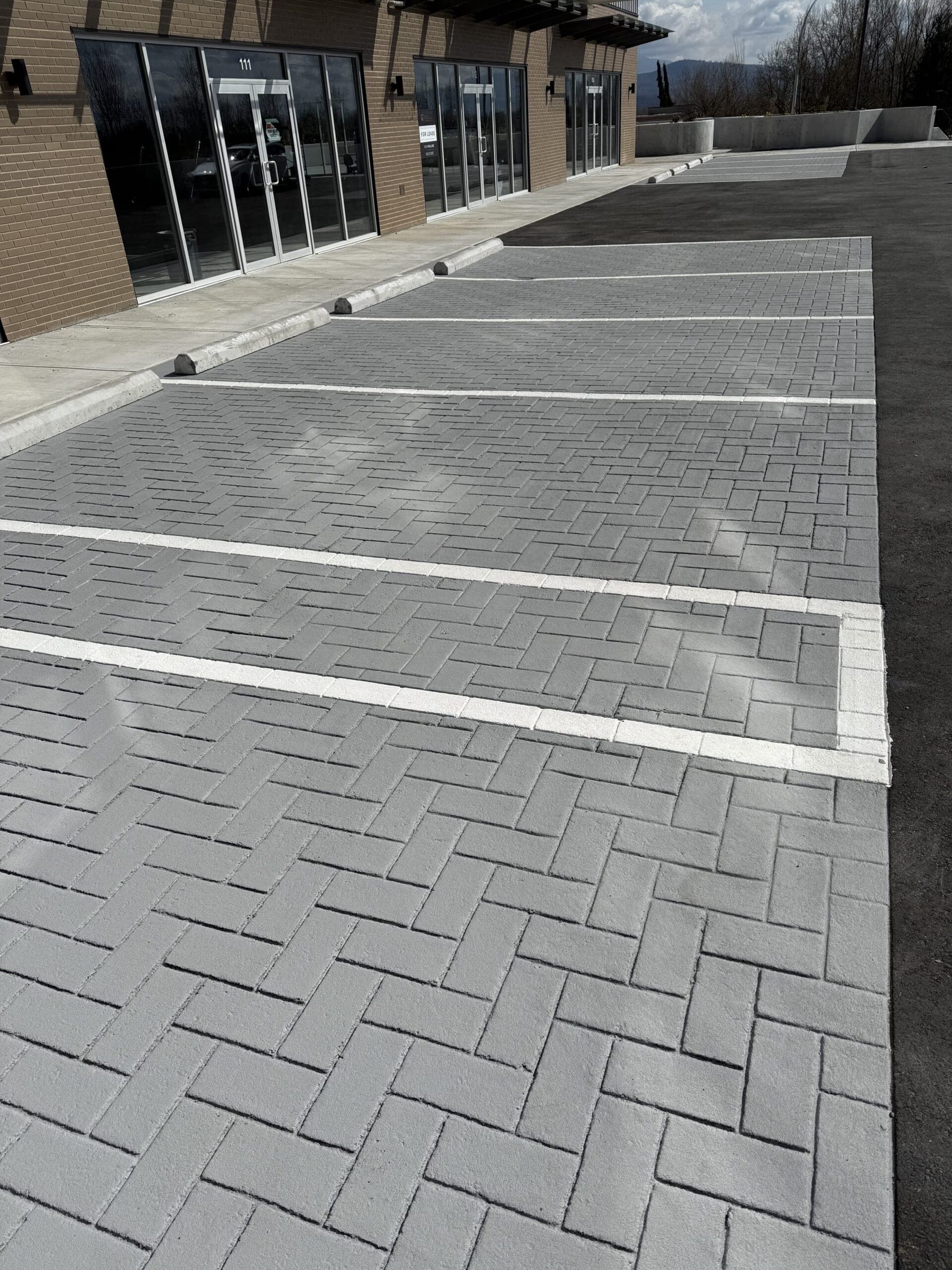
We installed the crosswalk last year. A herringbone pattern in stamped asphalt, deep terracotta colour, white margins, set into a single-lane road that becomes a pedestrian threshold for half the year. The pier is in the background of the photograph above. The Canadian flag is in the middle distance. The ferries, on a clear day, are visible just past the breakwater.
The brief
The municipality wanted three things. They wanted the crosswalk to be obviously a crosswalk — visible from a distance, unmistakable, day or night. They wanted it to feel like part of the park, not part of the road. And they wanted it to last, because the maintenance budget for waterfront infrastructure is a serious line item.
The first two requirements are typically in tension. A crosswalk that is loud enough to be unmistakable is usually loud enough to look out of place in a heritage streetscape. The herringbone pattern in deep red was the resolution. Up close, it reads as paving — quiet, considered, of-the-place. From the approach lane, it reads as threshold: the colour and texture differ enough from the surrounding asphalt that a driver registers the change at a hundred metres, well before any signage triggers.
What we used
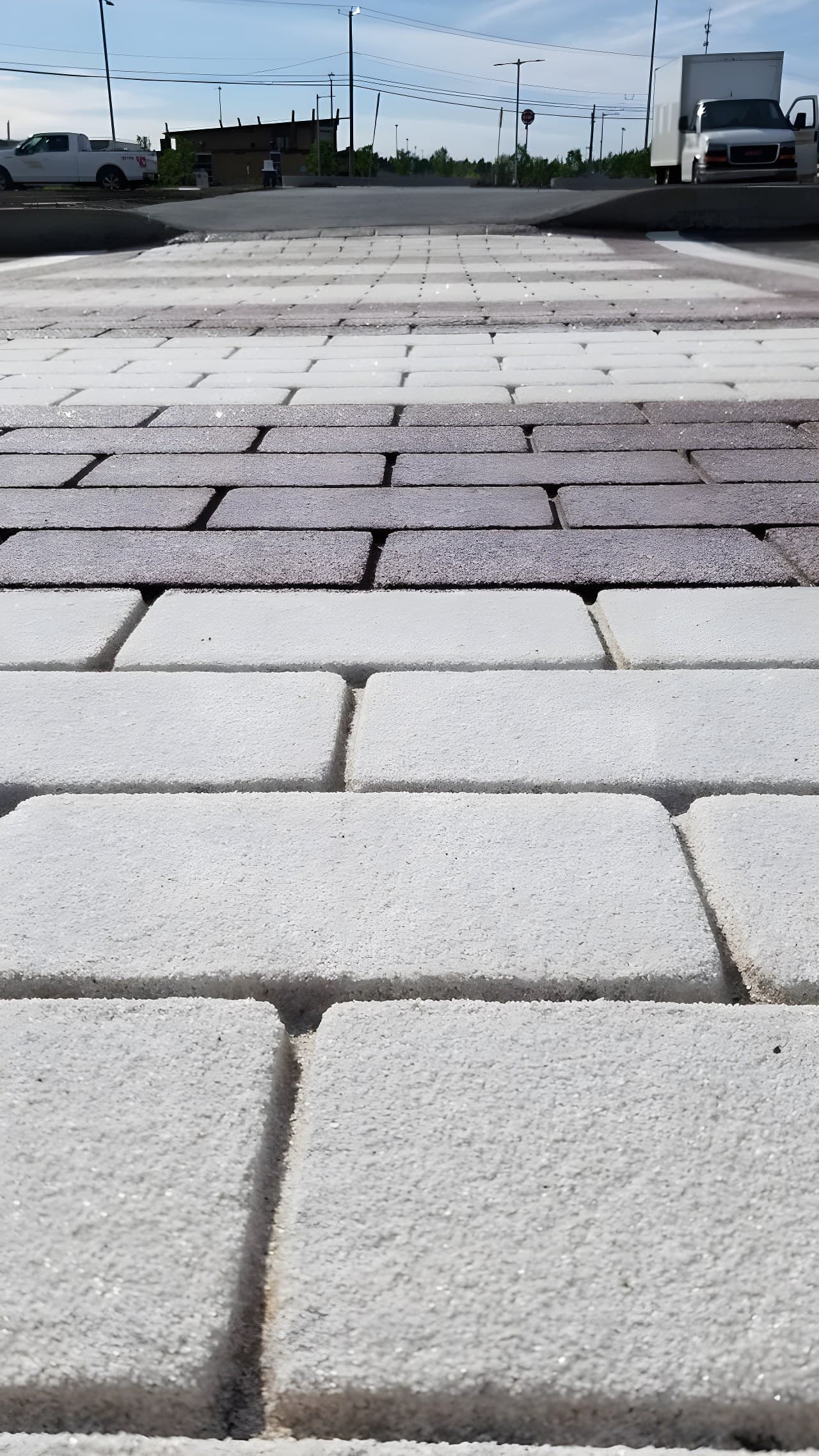
StreetPrint imprinted asphalt with a StreetBond colour coating sealed on top. The pattern mat is a herringbone — the same brick pattern the municipality specified for several other heritage corridors, so the new install carried visual continuity with the neighbourhood's existing public realm.
The colour is a custom blend matched to the existing brick paving on the boardwalk. It will fade slightly under marine UV exposure over time, but the surface system is designed for that — colour drift on a 7-year horizon, not 7 months. We expect the install to look more or less identical in 2030.
The white border is StreetBond, applied as a separate coat after the imprint cured. It's there for two reasons. The functional reason is daytime contrast — it sharpens the crosswalk edges so drivers register the boundary at speed. The aesthetic reason is that it picks up the white of the boardwalk railings, the white of the pier columns, and the white of the flag pole. A white border is structural in design terms, not just decorative.
What it didn't cost
The conventional alternative for a heritage crosswalk like this is real concrete pavers — laid by hand, set in mortar, requiring excavation and sub-base prep. A four-hundred-square-metre paver install in this configuration is a four-week project and runs well into six figures.
Our install was three days. The road closure was two of those days, of which one was overnight. The cost was roughly forty per cent of the paver alternative. The maintenance schedule is a colour touch-up every seven years, which is comparable to repainting a wood building.
The savings, in a municipality of White Rock's size, freed up enough of the public-realm budget to add the bollards and the lighting upgrade you can also see in the photograph. So the crosswalk did not just cost less — it enabled the rest of the streetscape.
Why we like this kind of project
There is a tendency in civic design to chase the headline projects — the new transit hub, the rebuilt waterfront, the marquee bridge. Those projects matter. But the smaller surfaces — the crosswalks, the small plazas, the entry thresholds — are where a place actually announces itself to the people who use it every day.
A four-hundred-square-metre crosswalk in White Rock is not going to win an architecture prize. But it's the surface that thousands of people, every weekend, step onto when they arrive at the park. It's the threshold between the road and the boardwalk. It's the first thing the ferry passengers see when they walk up from the pier.
That kind of surface is worth getting right. So we did.