When a Crosswalk Is Public Art
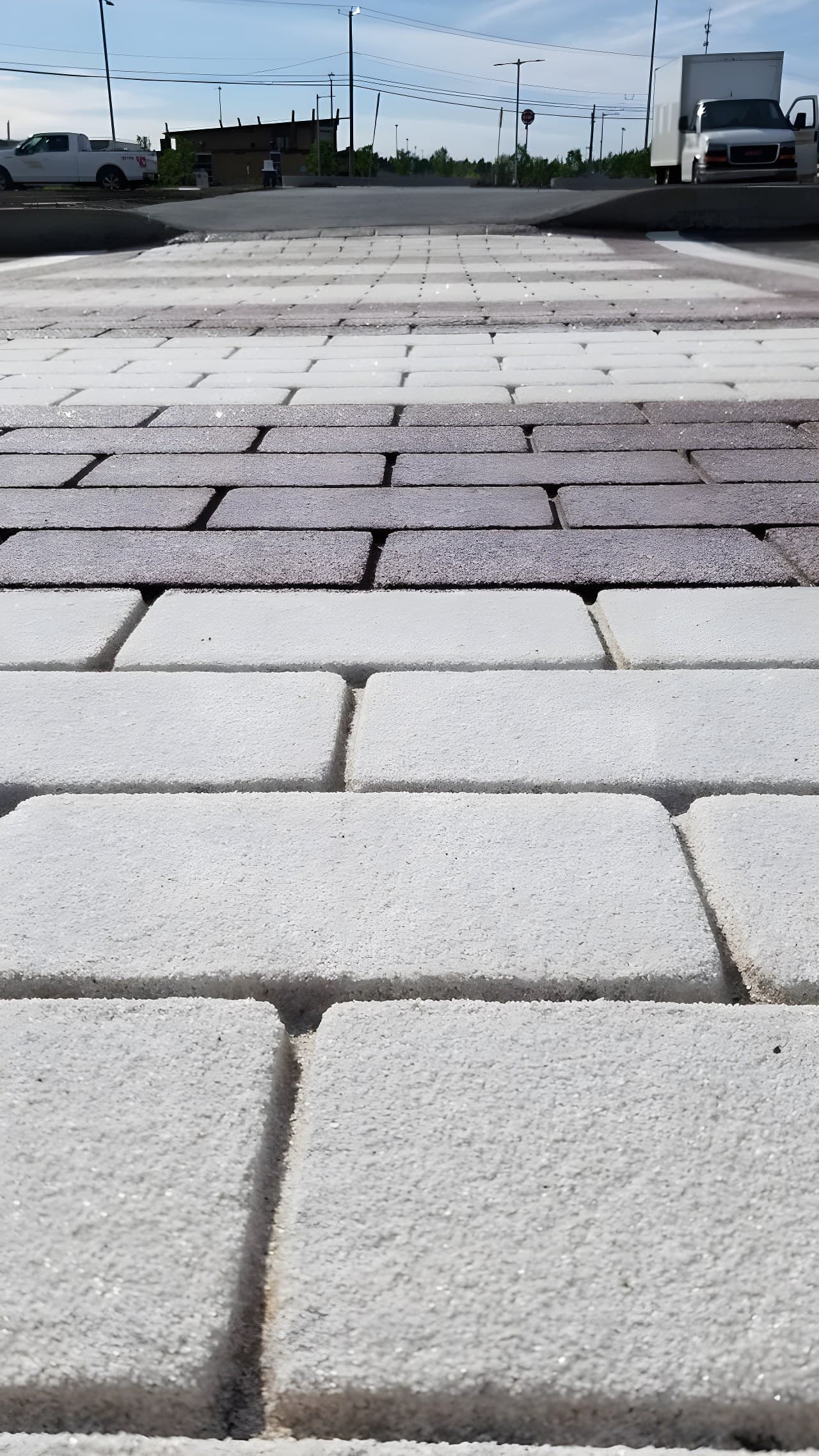
A few summers back we installed a set of crosswalks for the Nanaimo waterfront district as part of a public-realm upgrade. The brief called for decorative stamped asphalt with a marine-themed pattern, tied into the wider harbourfront redesign. What we ended up with was a crosswalk that functions as both traffic control and civic identity — and that's the category this kind of work actually belongs in.
We also installed a downtown Vancouver crosswalk upgrade around the same time with a more traditional brick stamp and a retroreflective finish. Two projects, two very different briefs, same underlying product.
This piece is about what goes into a crosswalk like that — and why cities across BC are asking for them now instead of five years ago.
The Shift Toward Decorative Crosswalks
A generation ago, a crosswalk was four white stripes and that was the end of the conversation. The shift since then has been driven by two things: pedestrian-safety research and placemaking strategy.
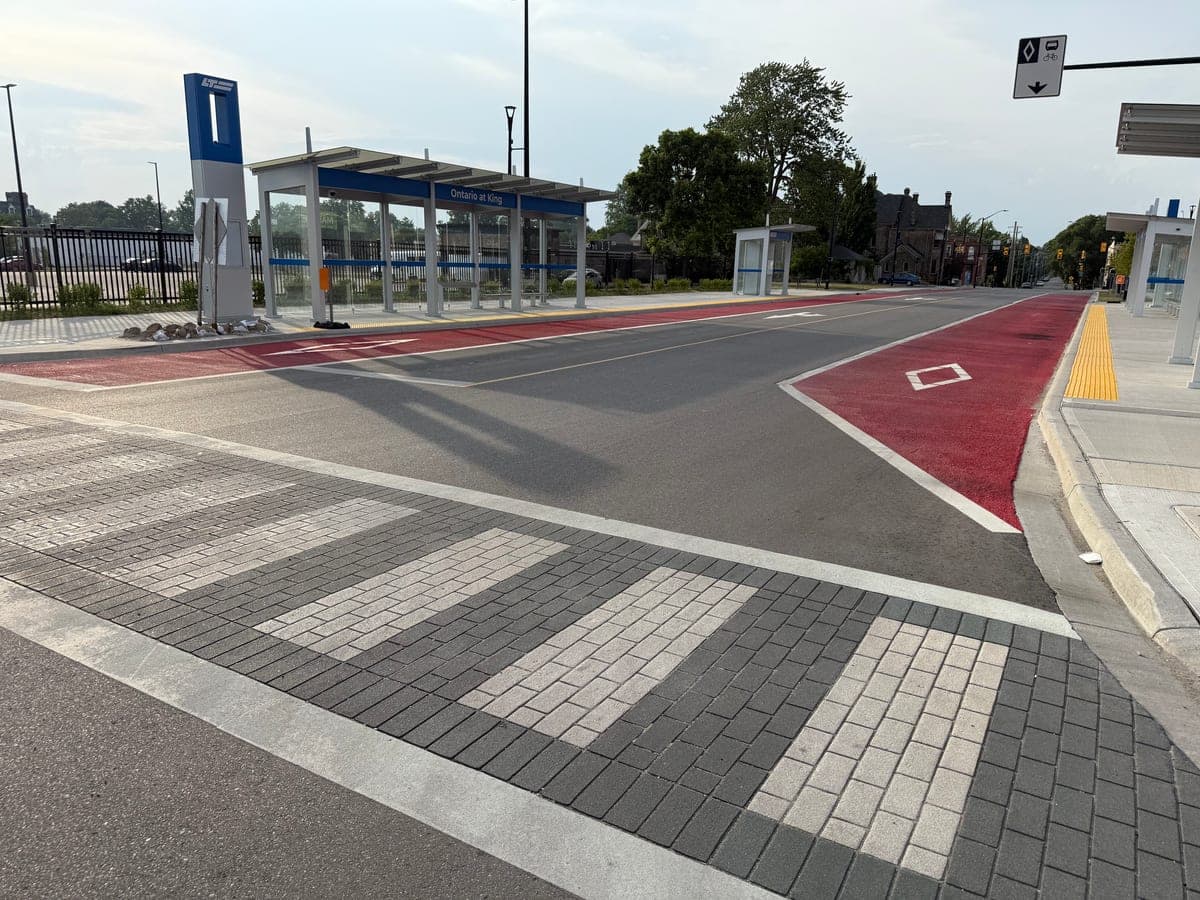
The safety side is straightforward. A visually distinct crosswalk registers earlier in a driver's peripheral vision than a standard ladder-pattern crosswalk. The visual pattern break — brick, cobblestone, ashlar — reads as information-dense. Drivers approach with more attention.
The placemaking side is the more recent driver. Cities in BC are rethinking their main streets as destinations, not through-corridors. A distinctive crosswalk is one of the cheapest interventions that signals to a visitor: you are somewhere specific now. The pavement becomes part of the brand of the district.
The Engineering Under the Pattern
What makes a decorative crosswalk durable under real traffic is the product choice, not the pattern design.
We use StreetPrint — stamped into fresh, hot asphalt with heavy-duty metal templates, then coated with StreetBond for colour and UV stability. The stamping happens in a narrow temperature window while the asphalt is still workable. Too cool and the impression is shallow. Too hot and the template distorts.
Once stamped and cooled, the surface is structurally identical to standard asphalt. A bus crosses it. A snowplow scrapes it. Winter freeze-thaw cycles work it up and down. None of that damages the pattern because the pattern isn't a coating — it's a three-dimensional impression in the asphalt itself.
The StreetBond coating over top carries the colour. It's UV-stable to a published specification and it wears as slowly as any pedestrian-rated coating on the market. A Nanaimo waterfront install from 2022 still reads in strong colour today.
Retroreflective Finishes Are a Real Upgrade
The downtown Vancouver crosswalk we did had a retroreflective finish — glass beads embedded in the surface layer that return headlight beams back to their source at night.
In a night-time pedestrian environment, that's the difference between a crosswalk that becomes a hazard after 9pm and one that stays readable. Vehicle headlights illuminate the retroreflective beads, the beads return that light, and the entire pattern outline registers from fifty metres out.
This is not a cosmetic upgrade. It's a specification decision that shapes whether the crosswalk performs in the conditions it actually needs to perform in.
What Cities Ask Us About
Most of the conversations we have with planners and streetscape designers at BC municipalities land on the same few questions:
How long does a decorative crosswalk last? In BC conditions, fifteen to twenty years with a mid-life coating refresh around year ten. The underlying stamped asphalt holds longer than that.
How does it compare in cost to four-stripe paint? Ten to fifteen times more expensive on install. Roughly comparable on twenty-year total cost, because four-stripe paint is a three-year rewrite cycle.
Can it carry snowplows? Yes. StreetPrint is designed for plow equipment and we install it specifically in climates that use plows.
Can we use it at a signalized intersection with heavy truck traffic? Yes — we've installed at exactly those conditions. The key is using the correct asphalt mix under the stamp and specifying the right coating over it.
If You're Planning One
The planning stage is where a good decorative crosswalk gets built. Pattern selection, colour palette, how the crosswalk ties into adjacent sidewalk treatments, and how it coordinates with signage — those decisions are made in design, not on install day.
We work with municipal engineering teams and landscape architects across BC on crosswalk specifications, and we're happy to come in early in a project to provide material and install input. Get in touch if you're scoping a public-realm upgrade.