Why BC Transit Is Coating Priority Lanes Red
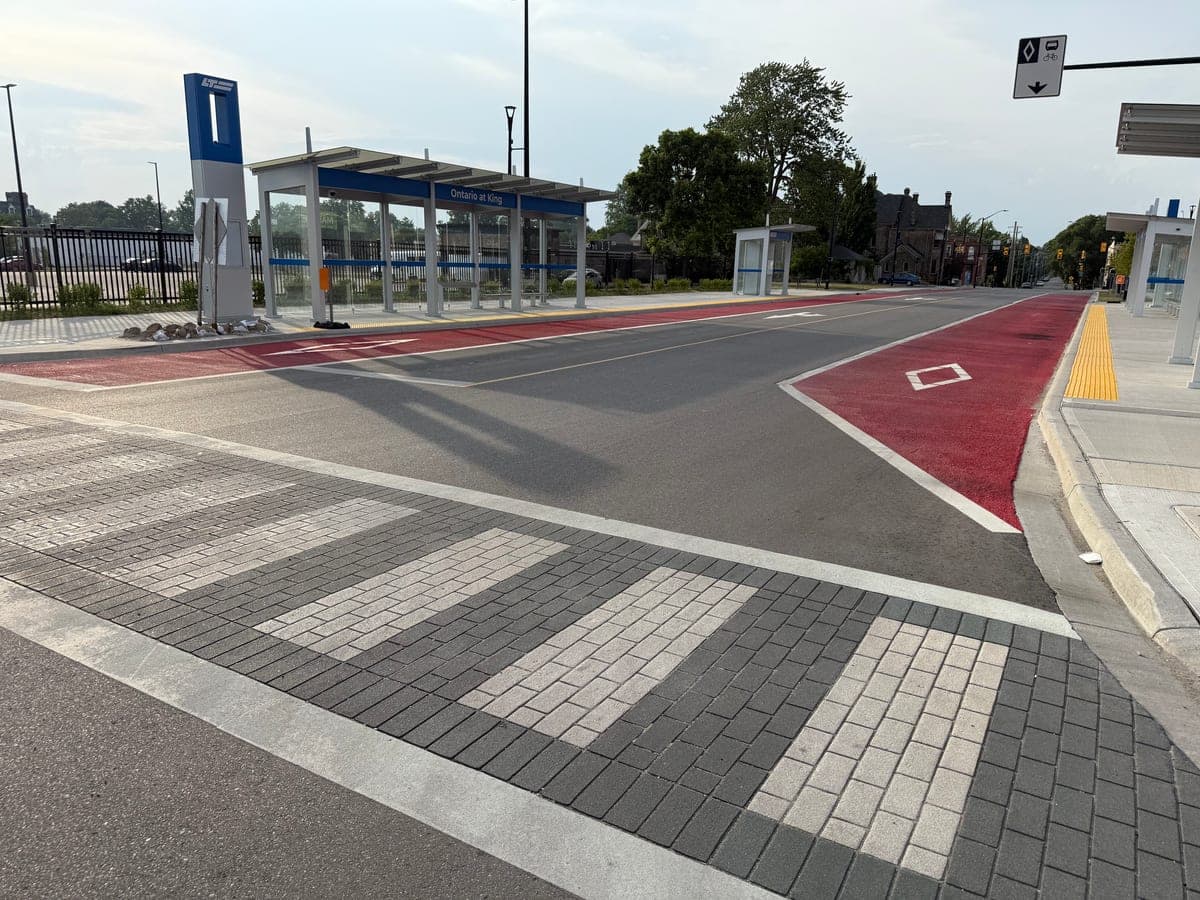
If you've driven through Douglas Street lately, or cut down Granville in Vancouver at rush hour, you've probably noticed something new at the edges of the road — long stretches of deep red lane, edged with white line-paint, carrying nothing but buses and the occasional cyclist.
We installed one of those lanes. A BC Transit priority corridor through Victoria, laid down in the summer of 2022. The red coating has been through three wet seasons and two real winters. It still reads as red at fifty metres, which is the point.
The Lane Itself Is Not the Product
Most people assume the colour is paint. It isn't. Paint wouldn't survive the first bus.
What we put down on these corridors is a structural surface coating — StreetBond SR in a municipal red. It bonds to the asphalt chemically, not mechanically, which matters because mechanical bonds give up when water gets under them. BC has a lot of water.
The coating itself contains a slip-resistant aggregate. That's not cosmetic. On wet asphalt in Victoria, bus tires exiting a stop pull laterally hard enough to polish the surface down inside a season. The aggregate gives the tire something to bite into.
Why Red, Specifically
The colour isn't arbitrary. It's coordinated with the province's transit-priority signage strategy and with the way drivers read the road under low light. Red in peripheral vision reads as restricted — you process it faster than text. A driver glancing sideways for a gap registers the colour before they consciously identify the lane.
That matters because the whole reason a priority lane exists is to move transit through congested corridors without bus drivers having to wrestle their way back into traffic. Every second a bus spends waiting for a gap is a minute lost down the route.
What We Watch For on Install Day
Three things make or break a transit-corridor install:
Surface temperature. StreetBond SR has a narrow application window — too cold and it doesn't cure into the asphalt properly, too hot and it skins over before it levels. In Victoria we get maybe four months where the mornings are reliably warm enough. Install crews time around that.
Base condition. If the asphalt underneath is cracking, any coating over top is just going to mirror the crack within eighteen months. We assess the base before we quote. If the asphalt needs milling and replacement before a coating goes down, we say so. Short-term a client saves money skipping that step. Long-term they pay twice.
Line paint sequencing. Priority lanes get standard lane-edge paint applied after the coating cures. The coating has to be fully set before paint goes over it, or the paint lifts at the first hard rain.
The Fraser Valley Is Expanding This
What started as a few isolated corridors is becoming a network. Vancouver's adding more RapidBus-style priority routes. TransLink's own specifications now reference high-friction coloured surfacing as a standard option, not a premium one.
From an installer's perspective, that means crews need to be ready to work at a municipal scale — not just a single lane, but phased closures across multi-kilometre corridors, night shifts, and coordination with transit dispatchers. We built out for that work because the demand was obvious.
If you're on the planning side of a municipal transit project in BC and you're evaluating surface options, we're happy to walk you through specifications, climate considerations, and what we've seen hold up on real corridors versus what hasn't. Request a specification conversation.