Commercial Parking Lots: Why a Coating Lasts Where Paint Fails
A commercial parking lot is one of the hardest working surfaces on any property. Every car that arrives rolls over the same twenty square metres near the entrance. Delivery trucks turn tight radius on the same inside corner. Snow and salt accumulate in the same four depressions. Then the spring thaw hits and all of it gets exposed at once.
We installed the full markings and accessible-parking graphics at Westshore Town Centre in Langford a few years back — TrafficPatterns preformed thermoplastic, custom arrows, stall markings, and the accessible-parking graphics in blue and white. The markings are still holding. The white lines painted by the general contractor before we arrived? Those are mostly gone.
Here's what separates the two outcomes.
Paint Is a One-Season Solution
A conventional traffic-paint stall line lays down roughly 300 microns thick. On a flat, low-traffic surface that might last eighteen months. In a commercial parking lot with freeze-thaw exposure, snow clearing, and daily vehicle traffic over the same spots, you're looking at six to nine months before visible fading and another six before the lines are unreadable.
Most property managers handle this with an annual repaint. That's an operational cost that just repeats every spring. Over a ten-year facility lifecycle, the total spend on paint exceeds what a thermoplastic install would have cost up front.
Thermoplastic Is Structural
Preformed thermoplastic bonds into the asphalt. The markings are typically 2–3mm thick with reflective glass beads embedded through the full depth. When a snowplow scrapes over one, the top of the marking wears — not the bond. The reflective beads that were below the surface become the new surface.
Durability in a lot context usually runs five to seven years for stall lines and seven to ten for higher-thickness applications like directional arrows.
Where Decorative Coatings Come In
Some commercial sites want more than function. A mixed-use development, a premium retail plaza, or a hotel approach wants the parking area to read as part of the architecture, not as an afterthought.
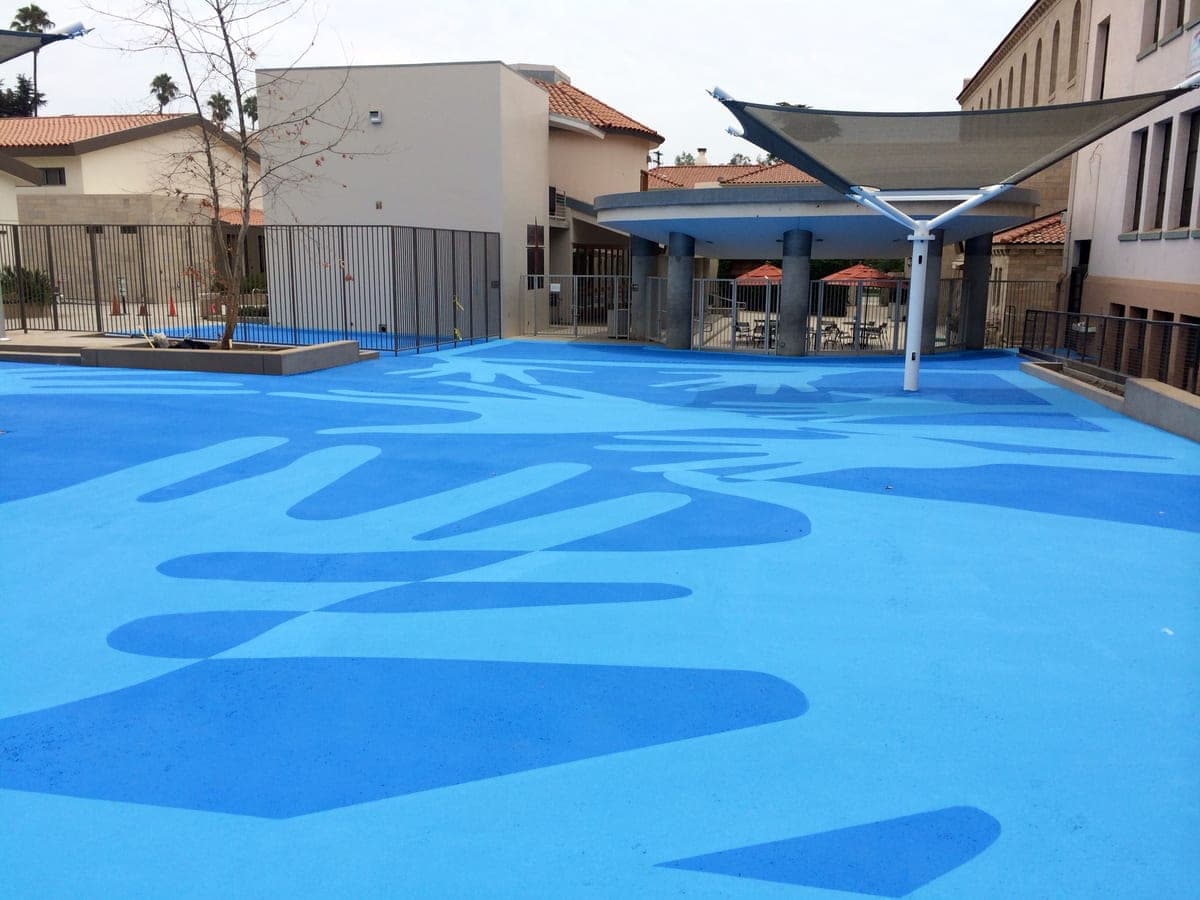
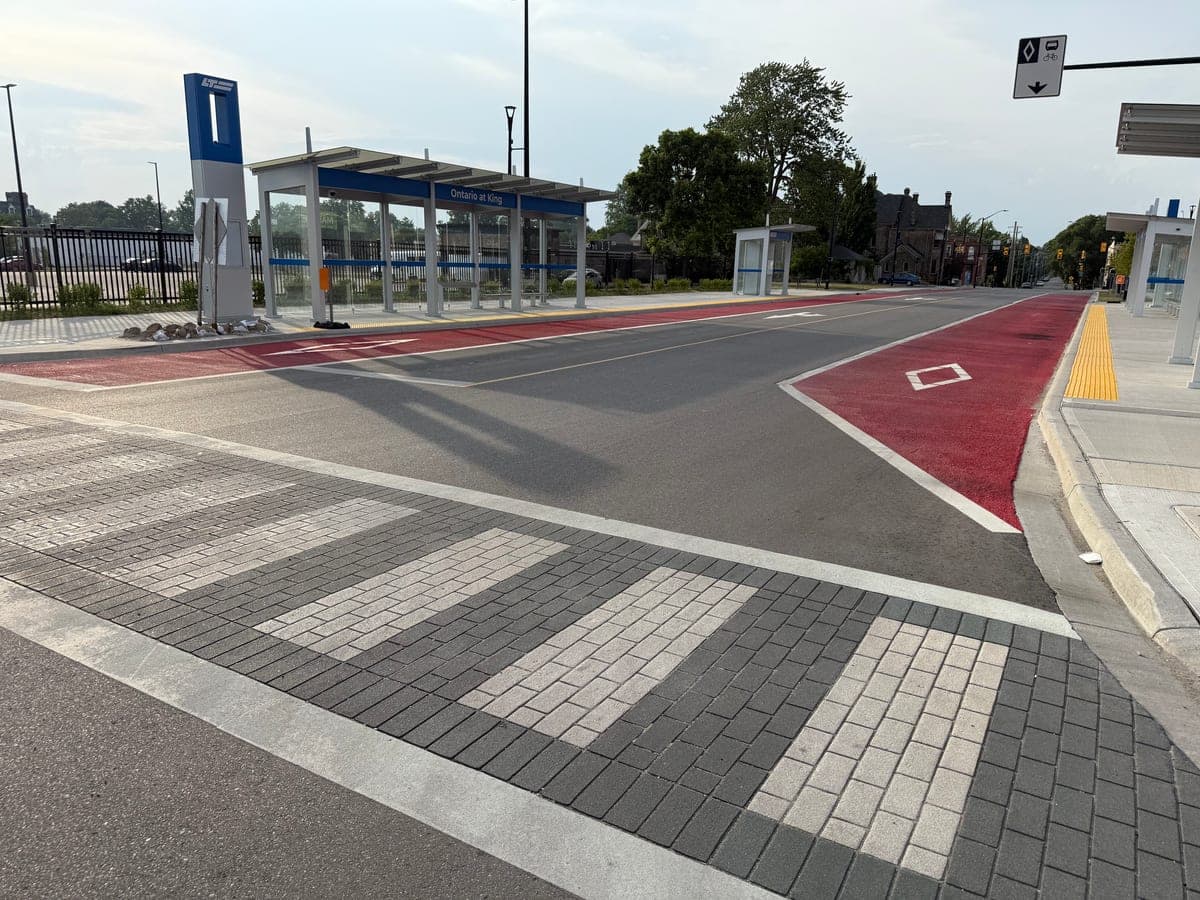
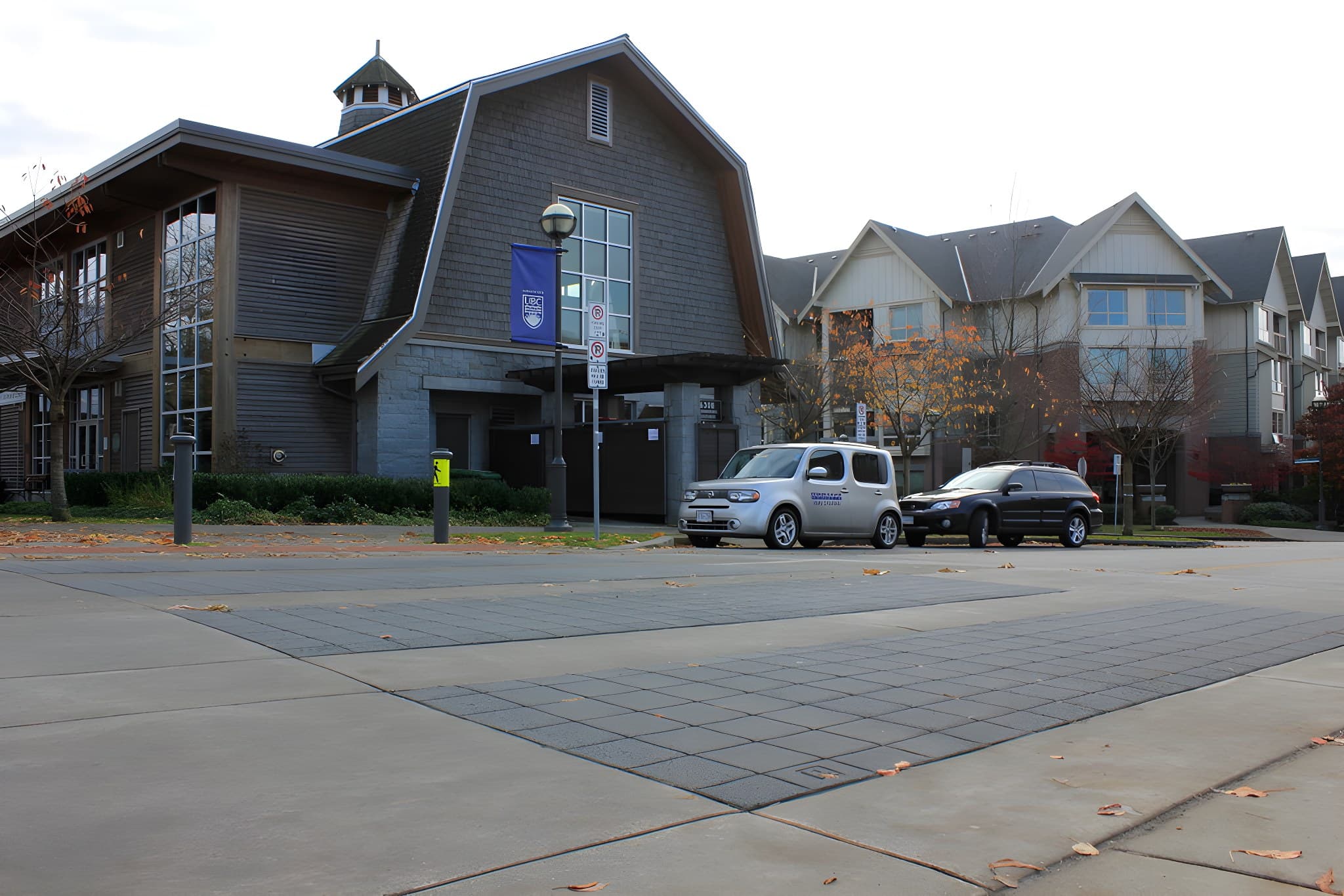
That's where a StreetBond coating earns its place. We've coated drive lanes, accessible-parking fields, and pedestrian crossings inside lots in deep grey, warm terracotta, and a slate tone that reads as natural stone from a distance. The coating slip-resistance is graded for vehicle traffic, and the colour range is specified for UV stability in North American conditions — meaning it doesn't fade to pink the way off-spec pigments do after two summers.
Coated zones inside a lot also reduce driver speed. The visual transition registers as a different kind of space. Customers slow automatically when they cross into a coloured pedestrian zone. That's a safety outcome you don't get from paint.
Accessibility Compliance, Done Once
BC accessibility requirements for parking — stall dimensions, international-symbol-of-accessibility placement, loading-zone striping, connecting accessible routes to building entries — are specific, and they change as provincial regulations update.
We install the accessibility package in preformed thermoplastic with the correct blue pigment, correct symbol sizing, and correct edge-of-stall tactile markings where required. A repaint cycle using the wrong symbol proportions or the wrong colour is a compliance problem, not just a cosmetic one.
When It's Worth the Upgrade
The case for thermoplastic and coatings over paint is strongest in three situations: lots that see heavy daily volume (retail, medical, institutional), lots exposed to snow clearing, and lots that are part of a premium development where the surface is part of the brand.
If the lot is low-traffic, sheltered, and rarely sees freeze-thaw, paint is fine. Everywhere else, it's just a maintenance cost compounding year over year.
We specify and install parking-lot markings and coatings across the Lower Mainland and Vancouver Island. Get in touch for a commercial scope review if you're budgeting for a 2026 or 2027 lot refresh.